

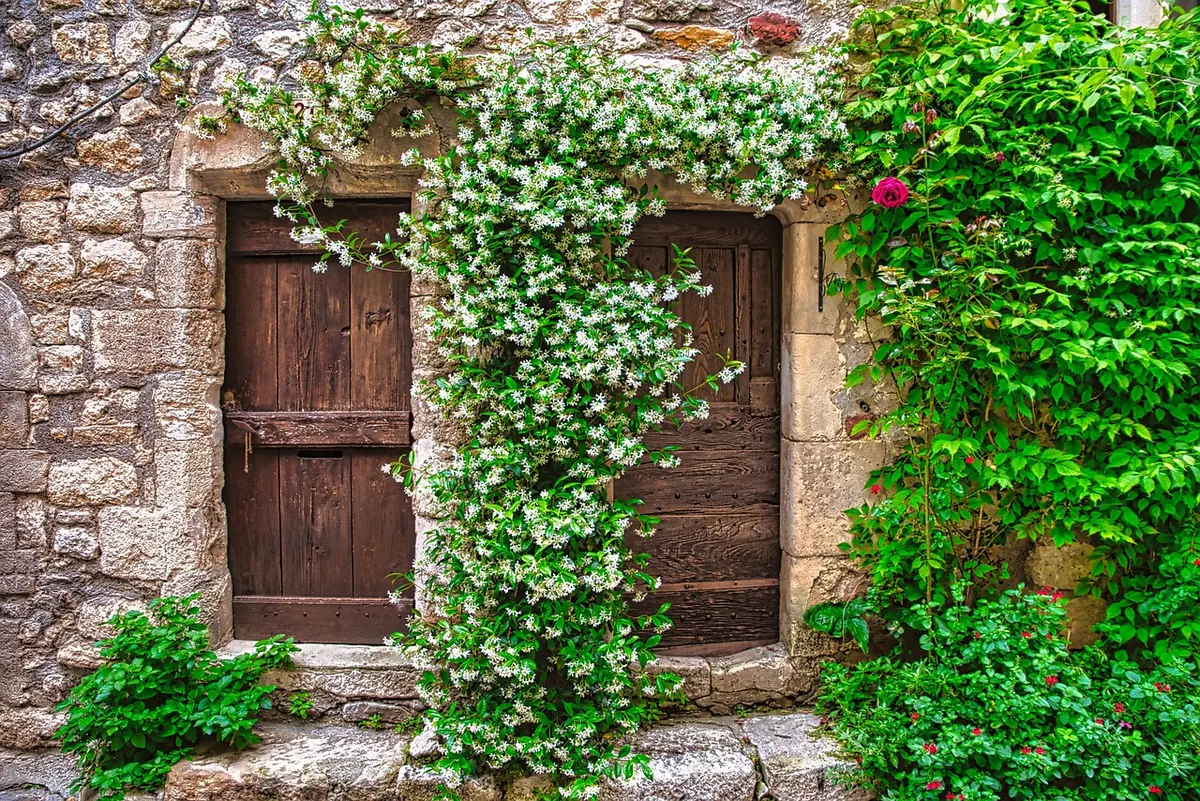
The entryway is the hardest-working space in the house and usually the smallest. It has to absorb wet shoes, keys, mail, grocery bags, and the coats of everyone who lives there, often in a hallway barely wider than the front door. A proper remodel would mean new flooring and built-ins, which is a different project with a different budget. What a cramped entry actually needs is a short list of corrections: better light, somewhere for things to land, storage that climbs the wall instead of the floor, and a rug that tells the eye where the room ends. All nine updates below fit under $200 total, and most can be finished in an afternoon.
1. Clear the floor, then measure what's left
Before you buy anything, empty the entry. Move the shoes, bags, and the drift of unopened mail somewhere else for an hour and stand in the space the way you do when you come home: keys in one hand, bag in the other, door swinging behind you. You will instantly see what is in the way.
Then take three measurements and save them in your phone. The width of your walking path. The widest stretch of blank wall. The height from floor to light switch. A clear path of roughly 30 inches is comfortable for most adults carrying something; if a bench or console narrows it below that, the piece does not belong here, no matter how good it looks. This one step prevents the most common small-entry mistake, which is buying furniture that fits the wall but blocks the door.
2. Fix the lighting before anything else
Poor light makes a small entry feel like a closet. Most builder-grade ceiling fixtures throw light straight down, so you get a bright circle on the floor and shadow everywhere a person actually stands. Two inexpensive moves help: replace the bulb with a warm white LED (look for 2700K to 3000K on the label, which reads as cozy rather than clinical), and add a second light source at eye level.
That second source can be a battery-operated sconce, a plug-in wall lamp, or a small table lamp on a shelf or narrow console. If you want a hardwired fixture or a new outlet, bring in a licensed electrician; the cost is worth avoiding a fire risk. A small motion-sensor nightlight near the door is also quietly useful for late arrivals and for anyone navigating the house before coffee.
3. Make storage go up, not out
Floor space is your scarcest resource, so spend wall space instead. A short list of upgrades that earn their keep:
- A wall rail with hooks instead of a coat rack. Mount the main row at about 66 to 70 inches from the floor so coats hang clear of bags and shoes.
- A second, lower row for kids or for leashes and reusable shopping bags, at roughly 40 inches.
- An over-the-door rack on the closet or entry door for hats, scarves, and umbrellas.
- A narrow shoe tower no deeper than 10 to 12 inches, or a stack of two lidded baskets if you prefer to hide the clutter.
- Floating shelves above the hooks for baskets that hold sunscreen, dog bags, and spare keys.
- A slim umbrella stand or a tall ceramic vase, which holds wet umbrellas without dripping on the floor.
Choose hooks rated for the weight of a heavy winter coat, and use wall anchors sized for your wall material. If you rent, damage-free adhesive hooks work for light items, but anything holding a wet parka should go into a stud or a proper anchor.
4. Give the small stuff a landing zone
Clutter in an entry is rarely about volume. It is about items with no home. A key rack by the door, a shallow tray or bowl for wallets and change, and one basket for incoming mail will handle most of it. The rule that keeps this working: the mail basket gets emptied on a set day each week, or it becomes a second junk drawer.
If you have no surface at all
Skip the console and use the wall. A shallow floating shelf eight inches deep, a fabric wall pocket for mail, or a magnetic board on the door all provide a landing spot without taking an inch of walking room. Group them in one vertical column so the eye reads them as a single unit rather than scattered clutter.
5. Choose the rug like it is a whole room
A runner does more than warm the floor. It draws a path through the space and visually widens a narrow hall. Look for a rug two to three inches narrower than your hallway on each side so the floor still shows at the edges, and leave four to six inches of clearance at the door so it does not catch. Dark patterns, flat weaves, and washable materials hold up far better than pale plush in a spot that sees wet shoes and road salt.
Always add a non-slip pad underneath, especially on tile or hardwood. If shedding is a concern, a flatweave or an indoor-outdoor style in a subtle stripe will look intentional rather than utilitarian.
6. Hang wall decor that works twice
A mirror is the single best wall piece for a small entry. Place it opposite the main light source or on the wall you face when leaving, and it bounces light into the darkest corner while giving you a last look before you walk out. Beyond that, keep it simple: two or three framed pieces in one horizontal line, or a small pegboard you can use for keys and notes. Resist filling every gap. Empty wall space is what makes the room feel calmer rather than cramped.
7. Add one comfort that changes the feel
A slim bench or stool gives you a place to tie shoes and can double as storage if the top lifts. A small plant, a woven basket, or a candle you actually light are the details that turn a functional hallway into a room. Choose one, not all three, and let the storage and lighting carry the rest of the work.
Put it together in a weekend
Work in this order: clear the floor, measure, improve the light, add hooks and storage, place the rug, then hang the decor. Doing it in sequence keeps you from buying a mirror before you know where the light falls or a runner before you know how much path you have. If your budget only stretches part of the way, spend on lighting and storage first and leave the decorative pieces for later, since those are the two updates you will notice every single day. Set a limit on how long you will shop — one store, one online order — and you will have a working entryway by Sunday evening instead of a folder of saved links.
Photo: lecreusois / Pixabay