

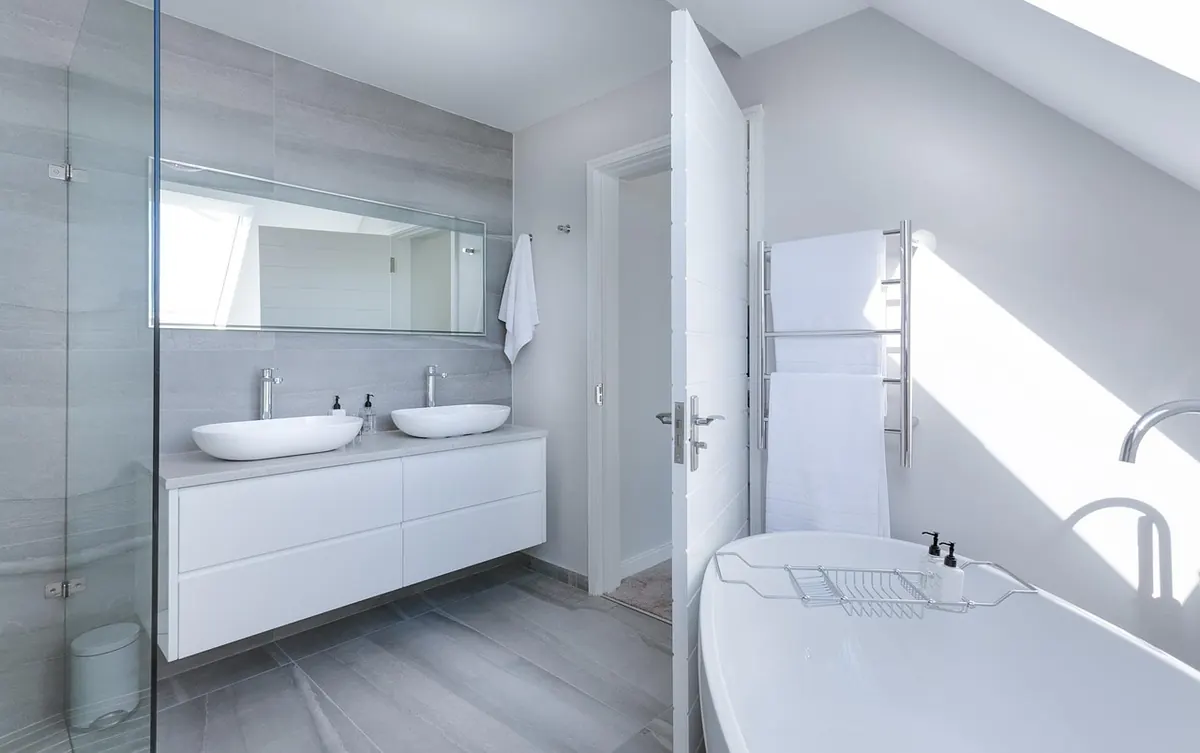
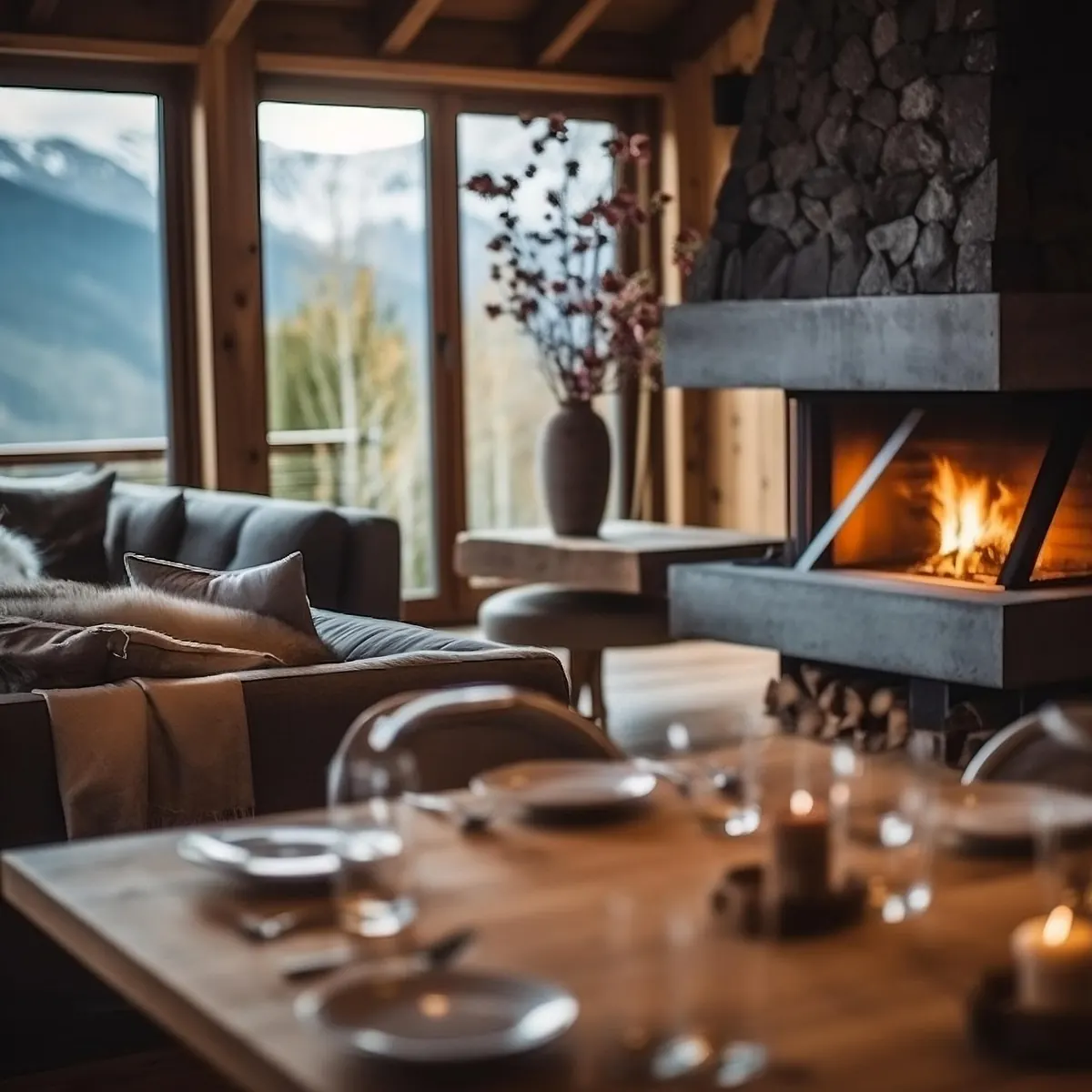

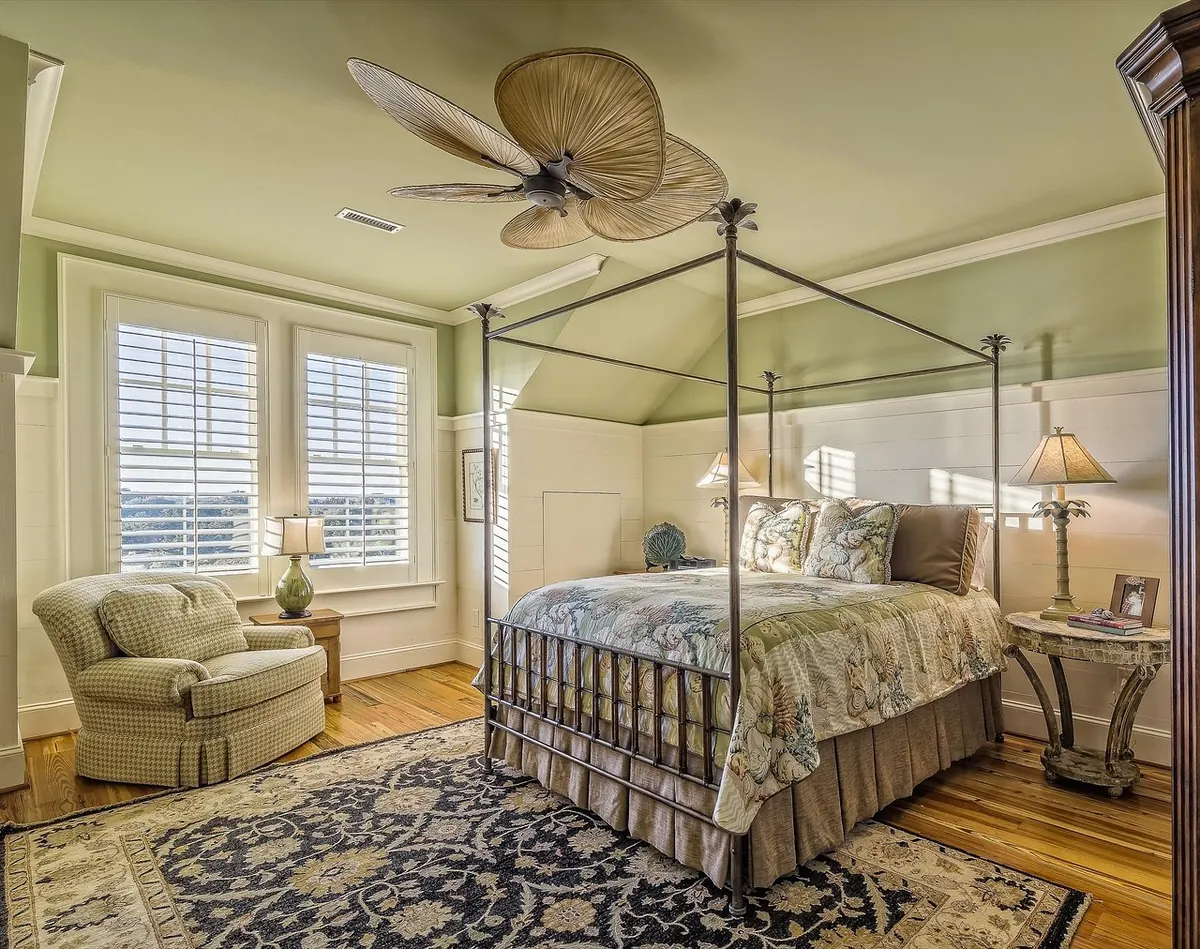

Painting one room is easy. Painting a whole house so the rooms still feel related is where most people stall. You choose a soft green for the living room, love it, then stand in the hallway wondering why the bedroom next door looks like it belongs to somebody else. The fix isn't one color everywhere. It's a small, deliberate palette — a base, two accents, and one trim — repeated in different doses from room to room.
Start With What You Can't Repaint
Before you fall for a paint chip, take inventory of the colors already fixed in your home: flooring, counters, tile, brick, the cabinets you aren't replacing, a stone fireplace, the charcoal sofa you bought last year. These are constraints, and constraints are useful. They narrow the field fast.
Lay paint samples right next to them. If your floors are a warm oak with orange undertones, a cool blue-gray will fight them in every room it touches, while a greige with a little warmth will settle in instead. Write the list down so you stop second-guessing yourself in the store.
- Flooring: warm medium oak
- Kitchen: cream cabinets, honed black counter
- Bathrooms: white tile with a slight blue cast
- Furniture that stays: charcoal sofa, navy rug
That short list tells you which direction your palette can safely lean — and which colors will always look slightly off.
Choose One Base Color and Give It Room
The base covers the most surface: the big walls, often the open-plan spaces, roughly sixty percent of what you see. Choose it first, and choose something calm enough to repeat without turning your house into a theme. Calm doesn't have to mean beige. A soft olive, a dusty rose, or a warm gray all work as a base if they're quiet enough to live with.
Then decide how the base travels. Using the same color in every room is a legitimate strategy, but light changes it. North-facing rooms read cooler and a little gray; south-facing rooms soak up warmth and look brighter than the chip in your hand. So adjust the formula, not the family. Use the lightest tint in a small, dark bedroom, the base color in the living room, and one or two shades deeper in a dining room that only gets used after dark.
Add Two Accents and Repeat Them
Accents are what make a house feel intentional rather than rented. Two is usually enough, and it helps to choose one warm and one cool, or one saturated and one muted, so they have something to say to each other.
The rule that keeps accents from looking random: each one should appear in at least three rooms, in different amounts. A deep teal might be an accent wall in the study, a pair of pillows and a lamp base in the living room, and nothing more than a ceramic vase on a bedroom shelf. Same color, three volumes. The eye connects the rooms without ever feeling like it's seeing a repeat.
Repetition is what turns three nice rooms into one home. Color doesn't need to match — it needs to rhyme.
Keep a running note of where each accent already lives before you add a fourth room to the list. It's easy to overdo your favorite color simply because you love it.
Let Trim Be the Constant
Trim, doors, and ceilings are the quietest tool you have for making rooms feel related, even when wall colors change from space to space. One trim color throughout the house does more for flow than a dozen coordinated wall colors. Choose a white with the same undertone as your base — warm whites for warm palettes, cooler whites for cool ones — and check the two side by side in daylight. Stark white next to creamy walls looks like a mistake, not a contrast.
A quick word on sheen
Sheen changes how a color reads almost as much as the color itself. Flat or matte for ceilings, since it hides imperfections. Eggshell for most walls. Satin or semigloss for trim and doors, where you want something washable and hard-wearing. Satin on kitchen and bathroom walls is practical in rooms that get splattered and wiped.
Vary the Value, Not the Color
Rooms should differ, just not disagree. The easiest way to get that variation is to move up and down in value — how light or dark a color is — while staying in the same hue. Living room in the base, dining room two shades deeper, bedrooms in the lightest tint, hallway a step between them.
This is the difference between a palette and paint-by-numbers. Every room gets its own mood, and they all still belong to the same house.
Where to Break Your Own Rules
Small, closed-off rooms are your freedom. A powder room, a laundry, a kid's bedroom, or a guest bath can carry a saturated color the rest of the house couldn't, because a door closes and the room resets. Paint the powder room deep green. Let the kids' room have the bright blue they asked for.
Just keep one thread connecting it back: reuse your trim color, borrow an accent, or repeat a finish. One familiar element is enough to make a bold room read as part of the whole rather than an outlier.
Sample, Then Live With It
Paint samples are the cheapest insurance in decorating. Buy small pots, paint swatches at least a foot square in two coats on more than one wall, and leave them up for a few days. Look at them early in the morning, in the flat gray of a rainy afternoon, and at night with the lamps on. If you'd rather not mark the walls, paint onto foam board and carry the boards from room to room.
A color on a screen and a color in a can are both guesses. The wall is the only honest answer.
The Order That Saves Rework
- Inventory the fixed finishes and write them down.
- Choose the base color, then sample it in three different rooms.
- Choose the trim white and hold it against the base in daylight.
- Pick two accents — one warm, one cool — and plan where each will appear.
- Assign a value to every room: lightest in small spaces, deepest where you want drama.
- Finish one room completely before buying paint for the next.
A palette that flows isn't one color spread thin. It's a family of colors that show up, disappear, and return at different volumes, so each room feels like its own place while the house still reads as one. Start with the floors and the sofa. The rest gets easier from there.
Photo: RDNE Stock project / Pexels