

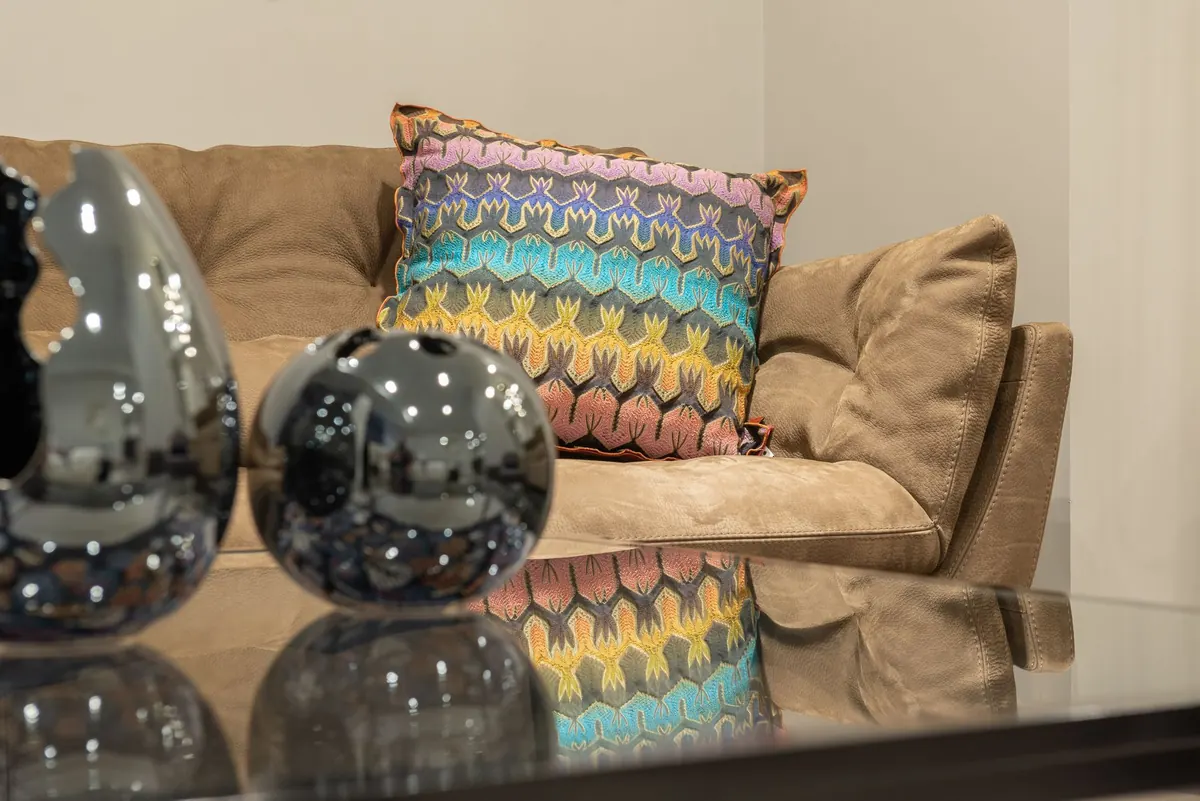
Every year brings a fresh stack of trend forecasts, and most of them are either too obvious to be useful or too specific to survive a Tuesday night with kids, pets and a pile of laundry. The looks below are the ones that hold up once the styling crew leaves: warmer palettes, softer shapes, fewer things, better light. The three at the end are the ones that photograph beautifully and then quietly wear you down. Read the whole thing as a filter, not a shopping list.
Seven Looks Worth Trying
1. Warm minimalism, with texture doing the work
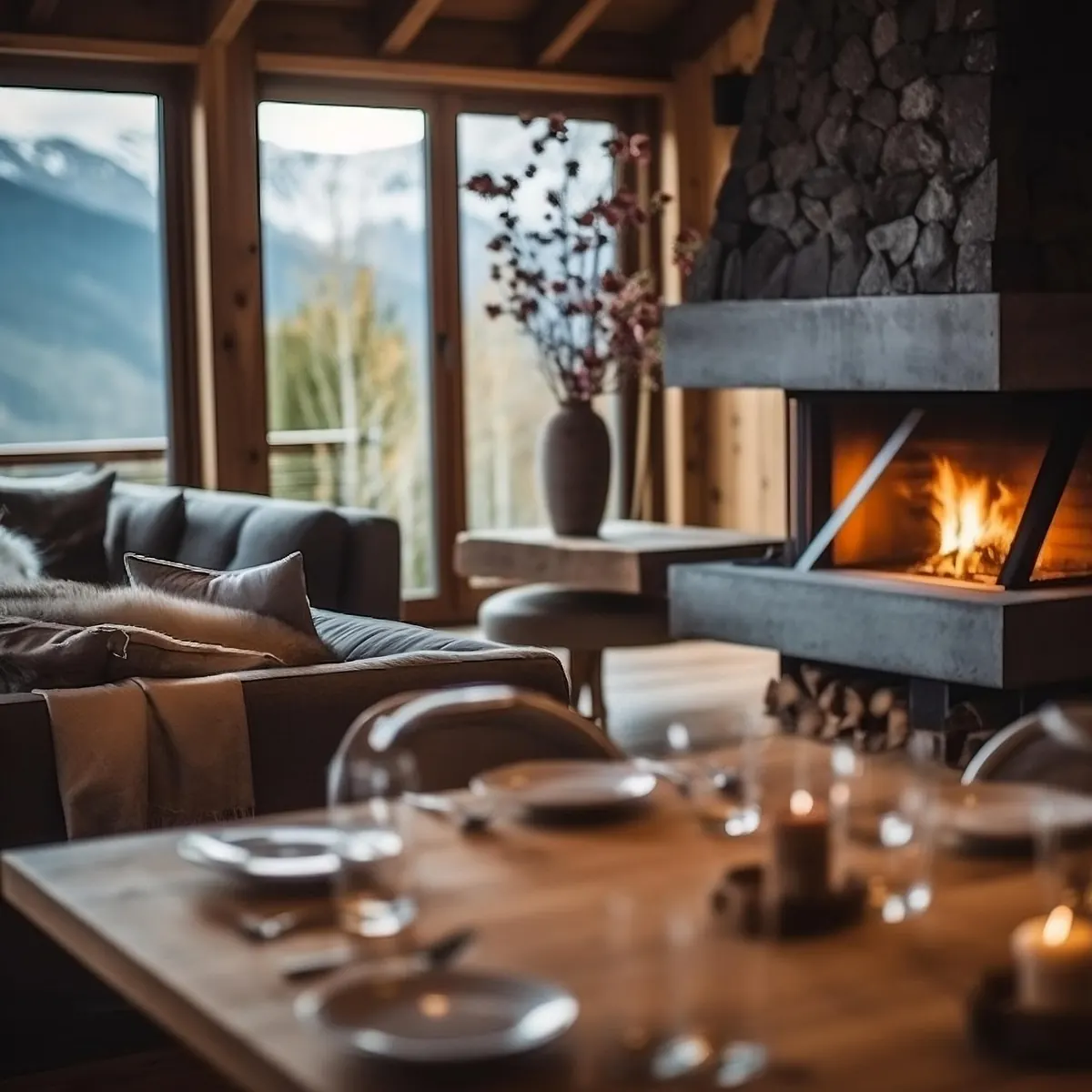
Minimalism isn't returning as an empty white box. It's returning warm: oatmeal and clay walls, wood with visible grain, wool, linen, unglazed ceramic. Texture is what keeps it from feeling like a waiting room, so aim for at least three textures per room — a wool rug, a linen sofa, a plastered wall — and hold the palette to two or three related tones. Fewer objects, warmer ones.
2. Color on the parts you can't move
Instead of the old accent wall, paint the fixed elements: trim, doors, ceilings, kitchen cabinets. Deep olive, ochre, oxblood and forest green all work in small, deliberate doses. Paint a large sample board and look at it in morning and evening light before you commit, because a color that's charming at noon can turn muddy at seven under warm bulbs. Trim is the cheapest place to test your nerve.
3. Curves, used sparingly
Rounded sofas, arched mirrors, oval tables and soft-cornered case goods keep showing up, and the appeal is practical. Curves soften boxy rooms, they're easier to walk around in tight spaces, and they're forgiving with children and shins. Start with one piece — a mirror, a side table, a single armchair — rather than replacing an entire seating group at once.
4. One vintage piece per room
Mixing old and new is still the fastest way to stop a room reading like a catalog page. The rule: one secondhand, inherited or flea-market piece per room, chosen for scale and character rather than for a label. Measure the gap you want to fill before you shop, then be willing to walk away. Patina is the point. A few scratches aren't a defect.
5. Layered lighting instead of one big ceiling light
Overhead light alone flattens a room and makes everyone look tired. Layer floor lamps, table lamps and sconces at three different heights, put them on dimmers where possible, and choose warm bulbs — around 2700K — so evening light feels like evening. A good test: for one week, switch off the ceiling light after dinner. If the room feels better, you've found the problem.
6. Honest materials that age visibly
Limewash, unlacquered brass, raw linen, handmade tile, unfinished oak. They share one trait: they change with use. Brass darkens, limewash softens, linen creases. That's the charm and also the trade-off, since some of it asks for occasional maintenance and none of it will ever look factory-perfect. Choose it only if you genuinely like patina.
7. Rooms that do two jobs
Dining tables double as desks, bedrooms hide reading corners, hallways absorb a pantry, laundry tucks behind a curtain. Zone these spaces on purpose: a rug defines the floor, a lamp defines the mood, and closed storage hides the second job while the first one is happening. The goal isn't more rooms. It's rooms that shift through the day without looking like a mess.
Three Looks to Skip
None of these are crimes. They're just hard to live with full-time, especially in a home that isn't staged.
1. Theme rooms played straight
Cottagecore, coastal, retro diner, grandmillennial — as a mood board, fun. As an entire room, the theme dates quickly and leaves no room for the life you actually live. Borrow two or three cues instead: a color, a material, a shape. If a guest can name the theme within three seconds of walking in, it's probably too much. Themed rooms also trap you, because every new object has to match.
2. Undersized trend furniture
Micro sofas, slim benches used as dining seating, low stools as everyday chairs. They look light and airy in photos and feel miserable by week three. Measure the room first, then buy the largest seating that still leaves a comfortable walking path around it — roughly three feet on main routes. Comfort beats a lighter silhouette every time.
3. Open shelving as the kitchen default
Open shelves work in one small run, holding the things you reach for daily. Run them around the whole kitchen and you've created a dusting job and a permanent visual to-do list. If you love the look, limit it to a single wall and keep the rest closed. The same logic applies to glass-front cabinets.
How to Test a Trend Before You Commit
- Buy the smallest version first. A cushion, a lamp, one chair. If you still like it after a month, consider the larger purchase.
- Live with a swatch, not a screen. Paint samples onto board, tape fabric to the wall, and leave them for a week in real daylight.
- Check it against your routine. Does it need daily tidying? Does it block a door, a drawer or a walkway?
- Add one piece at a time. A room assembled over months looks layered; a room bought in one weekend looks like a showroom.
- Measure twice, including doorways and stairs. Furniture that won't fit up the stairs is a problem no trend can fix.
- Ask what happens when it's over. Solid wood, wool, brass and good ceramic outlast the trend cycle. Novelty shapes and printed particleboard rarely do.
Start With One Corner
Pick the spot you see most: the corner where you drop your keys, the chair you sit in with coffee, the wall you face from the sofa. Apply exactly one idea from this list there, live with it for a few weeks, and pay attention to how it feels on an ordinary Wednesday rather than on the day you styled it. That's the whole method, really. Trends are ingredients, not instructions.
And if a change means moving walls, plumbing or wiring, treat it as a renovation rather than a refresh: get quotes from licensed trades and check what your local rules require before work starts. The best decor decisions are the ones you'd still make if nobody were watching.
Photo: Max Vakhtbovych / Pexels