



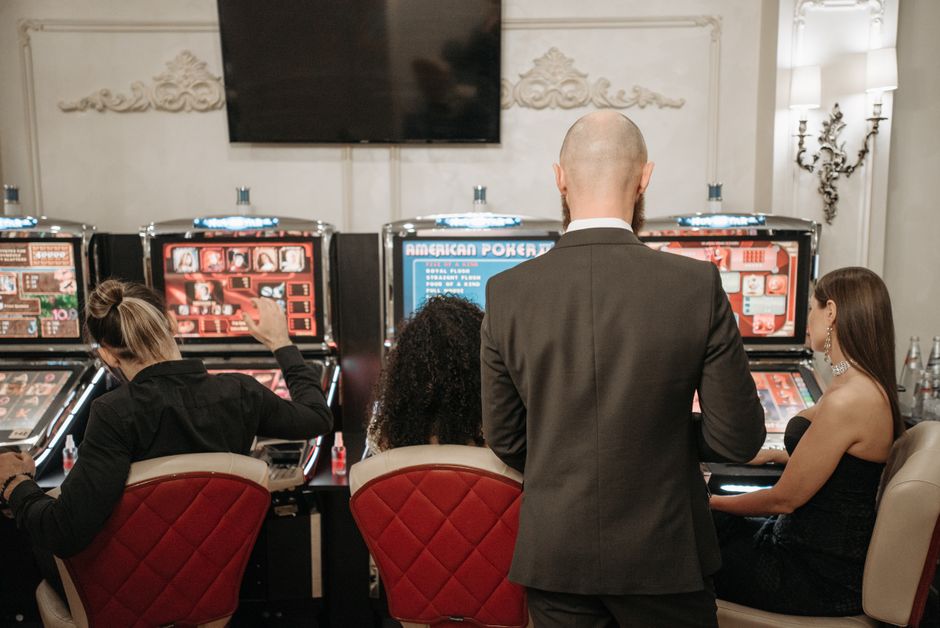

Ask ten people why they gamble and you'll get ten different answers, but almost all of them boil down to one thing: the thrill of not knowing what happens next. What separates the person feeding a slot machine at 2 a.m. from the poker player grinding a cash game is not the size of their bankroll. It's the nature of the uncertainty they're chasing. That distinction matters far more than most players realize, because it shapes bankroll management, strategy, and how long your money actually lasts.
Slots: Pure Variance in a Box
Slots are the simplest and most brutal form of gambling on the floor. There is no skill component, no reads, no decisions. You press a button, a random number generator decides your fate, and you either win or you don't. What makes slots interesting is not strategy, it's variance. A high-volatility slot like a Megaways title might pay out 96% RTP over millions of spins, but in any given session you could lose your entire balance in twenty minutes or hit a 5,000x multiplier on spin number three. That's the appeal and the trap.
Concrete example: a slot with a 96.5% RTP and high volatility might go 400 spins without a bonus feature. Another machine with 94% RTP and low volatility will dribble out small wins constantly, which feels friendlier but actually bleeds your balance faster over time. Players consistently underestimate how much that 2.5% RTP gap matters across a long session. If you run 1,000 spins at $1 per spin on the 94% machine, your expected loss is around $60. On the 96.5% machine, it's about $35. That's not a rounding error.
What actually matters with slots
- Volatility first, RTP second. A 99% RTP ultra-high-volatility slot is a terrible choice if your bankroll is $50.
- Bankroll math. A common rule is 200x your bet size minimum for high-volatility games. Betting $1 on a 1,000-spin session needs at least $200 set aside.
- Bonus terms. Wagering requirements of 40x the bonus on a high-variance slot can be mathematically near-impossible to clear.
Slots reward patience barely at all. They reward bankroll discipline enormously. That's the whole game.
Poker: The Only Game Where You Beat Other Players
Here's the crucial difference between poker and every other game in the casino: you're not playing against the house. You're playing against the people sitting around the table, and the house takes a rake. If you're better than the other players, you profit long-term. This is why poker has produced a generation of professionals who treat it like a job, and why slots, blackjack, or roulette never quite will.
But poker is brutal in a different way. The learning curve is steep, the variance is real, and it doesn't forgive emotional decision-making. A poker player who tilts after a bad beat can lose a week's profit in an hour. The game punishes leaks relentlessly.
Realistic skill tiers in poker
- Preflop ranges. Knowing which hands to play from which position. Most beginners play roughly twice as many hands as they should.
- Pot odds and equity. Calling a $20 bet into a $60 pot requires around 25% equity to break even. If your draw only has 18%, it's a losing call.
- Exploitative adjustments. Against a calling station, stop bluffing. Against a nit, steal their blinds. This is where winning players separate from break-even ones.
- Mental game. The best players treat tilt as a structural risk, not a character flaw.
If you're not willing to study, poker will be slower and more frustrating than slots. If you are, it's one of the few games where an edge actually compounds. If you want to dig deeper, L'Avenue Dubai is worth a look.
Sports Betting: Information Is the Edge
Betting on sports sits between slots and poker. There's no RNG, and there's no opponent to outplay in the traditional sense, but there is an enormous information marketplace. Sharp bettors make money by knowing something the market doesn't, or by being faster and more disciplined about line movement than recreational bettors.
Consider a concrete example: a soccer match opens with the home team at +105. News breaks that the starting striker is out injured. Within ten minutes, sharp money pushes the line to +140. If you bet early, you got the better number and are technically profitable even before kickoff, because you hold a position the market now prices worse than you acquired. That's how professionals think about betting: not "will this team win," but "is this number wrong?"
What separates winners from losers
- Line shopping. The difference between -110 and -105 on 500 bets is thousands of dollars across a season.
- Closing line value. If your bets consistently beat the closing line, you're beating the market long-term, regardless of short-term results.
- Specialization. Sharps focus on one or two leagues rather than betting every game on the board.
- Bankroll units. Pros bet 1-3% of bankroll per play, not 20% on a "lock."
Sports betting is also the category most vulnerable to emotional decision-making. Fandom blends with gambling and people bet on their favorite team, which is one of the fastest ways to lose an edge.
Which One Should You Actually Play?
It depends less on the game than on your temperament. Slots are for people who want pure entertainment and can treat losses as the cost of an evening. Poker is for people who want a mental challenge and are willing to invest hundreds of hours studying. Sports betting is for people who track statistics, read injury reports, and are comfortable with slow, incremental edges over a long season.
The biggest mistake new players make is drifting between all three without committing to any. They'll lose $200 on slots, try to win it back on a parlay, then jump into a poker game tilted, and lose again. Each format punishes a specific psychological weakness, and switching games to chase losses amplifies that punishment.
Final Thought: Pick Your Uncertainty
All gambling is about uncertainty, but the shape of that uncertainty is what determines whether you have fun, break even, or go broke. Slots give you fixed, house-controlled uncertainty. Poker gives you uncertainty against other humans, which is beatable. Sports betting gives you uncertainty against the market, which is beatable only with information or discipline most people don't have.
There's no shame in any of it, as long as you know which one you're actually playing, what the real edge looks like, and where the money genuinely goes. The moment you stop pretending slots are beatable or poker is easy, you're already a better gambler than 90% of the people around you.